Deep winter
The coldest and clearest months. Eagle hunting is active, ice forms thick on Lake Khövsgöl, and the light is low and long all day. Travel is possible but demands proper clothing and shorter days on the road.
Choosing the month matters more here than choosing the route. The same valley is a different country in March and in September.
There is no bad month to travel in Mongolia, but there is a wrong month for a given journey. Ice determines whether Khövsgöl can be crossed. Snow determines whether tracks can be read in the Altai. Pasture determines where herding families will be camped, and therefore whether you can visit them at all. What follows is how we think about the calendar before we propose a route.
Broad patterns first. Regional variation is significant — the Gobi, the Altai and the northern taiga rarely share the same weather on the same day.
The coldest and clearest months. Eagle hunting is active, ice forms thick on Lake Khövsgöl, and the light is low and long all day. Travel is possible but demands proper clothing and shorter days on the road.
Ice festivals, camel festivals and the first movement of herds. Spring is the least predictable season: warm afternoons, sudden snow and the dust storms that follow the thaw.
Green steppe, long daylight, warm days and cool nights. Naadam falls in July. This is the most comfortable travel window and the busiest one, so ger camps and domestic flights need booking well ahead.
Arguably the finest travel month is September: golden grass, stable weather, fewer travellers and herds gathering for the move to winter pasture. By November the cold has returned in earnest.
What the country is actually doing, month by month.
Coldest month nationwide. Bright, dry and still. Suited to eagle hunters, winter photography and travellers prepared for severe cold. Tsagaan Sar, the lunar new year, sometimes falls late in the month.
Tsagaan Sar is most often celebrated now — a family festival, and a season when herder households are at their most hospitable. Extreme cold persists; road travel is slower.
Lake Khövsgöl ice is at its most reliable and the Ice Festival takes place on the frozen surface. The Thousand Camel Festival runs in the South Gobi. Days lengthen quickly.
Thaw and transition. Livestock are weak after winter and herders are occupied with newborn animals. Dust and wind are common. A quiet, inexpensive, less predictable month.
The steppe turns green from the south. Newborn foals and calves everywhere. Warm afternoons, cold nights and a real chance of late snow in the north and west.
Reliable warmth arrives. Wildflowers in Central Mongolia and the Khangai. Rivers run high from snowmelt, which affects crossings in the Khentii and the taiga.
Naadam, the national festival of wrestling, archery and horse racing, is held nationwide on fixed public holiday dates in mid-July, with regional Naadams before and after. The busiest weeks of the year.
Warm and green, with the year’s heaviest rainfall — usually short afternoon storms rather than sustained rain. Good riding conditions and full pasture.
The connoisseur’s month. Stable weather, golden grass, sharp air, strong light and far fewer travellers. Autumn herd movements begin.
The Golden Eagle Festival is held in Bayan-Ölgii in early October. Cold arrives in the west and north first. Ger camps in remote regions begin to close.
A shoulder month with little tourism infrastructure open. Clear, cold and empty. Suited to photographers and travellers who want the country entirely to themselves.
Winter proper. Short days, deep cold and the beginning of the eagle hunting season in the Altai. Snow cover makes tracking work possible in the mountains.
Several of Mongolia’s best-known events move each year with the lunar calendar or with local decision. We confirm dates with regional organisers before committing a route, and we would rather move your journey by a week than promise a date we cannot hold.
Late January or February, set by the lunar calendar. A family occasion rather than a spectacle; travel and services slow for several days.
Usually early March. Camel racing, polo and herding demonstrations in the Gobi.
Usually early March, on the frozen lake. Ice sculpture, skating, sleigh racing and shamanic ceremony.
Mid-July national holiday, with the largest events in Ulaanbaatar and smaller, more intimate Naadams in the countryside through the month.
Usually the first weekend of October, with a smaller festival in September. Competition between Kazakh eagle hunters and their birds.
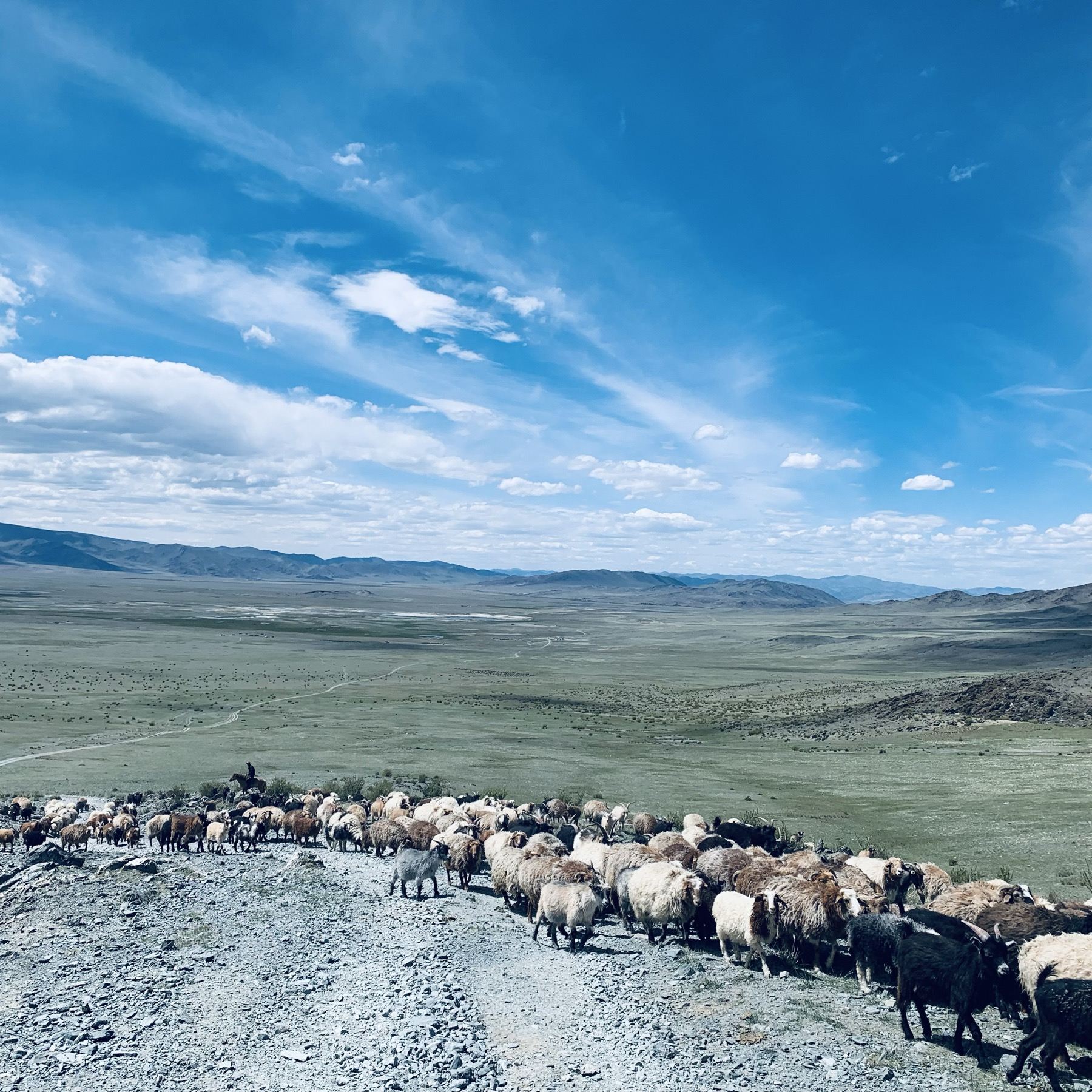
Four practical consequences that shape every itinerary we write.
Spring melt and summer rain both affect river crossings in the Khentii, the Orkhon valley and the taiga. Winter, counter-intuitively, can be the easier season to move through some terrain, because frozen ground is firm ground.
Households move between seasonal pastures. A family you can reach in an afternoon in July may be four hours further away in October. Visits are arranged around their movements, not ours.
Snow leopard tracking depends on snow and on animals moving to lower altitude. Argali, ibex and gazelle behave differently by season. Nothing is guaranteed in any month.
Midwinter gives roughly eight hours of usable light and temperatures that can fall below −40°C in the north. Midsummer gives sixteen hours and afternoon heat in the Gobi. Both are workable with the right preparation.
Give us your dates and we will tell you honestly what those weeks are good for — and what they are not.
Build your route