Our team

The people who make the distance possible.

Guides, drivers, horsemen, specialists and hosts turn a route into an expedition.

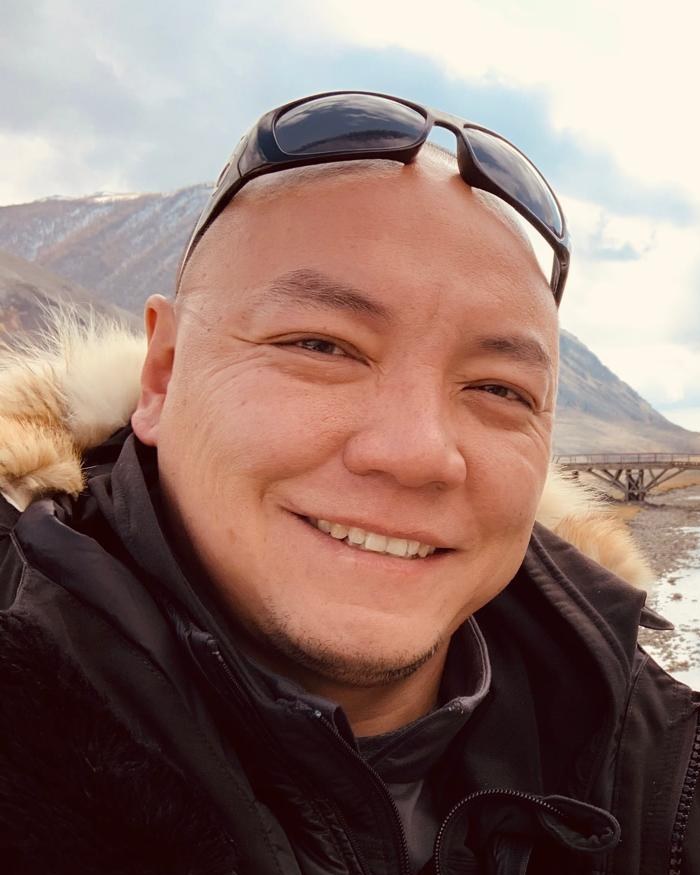
Chief Journey Officer

Anand Munkhuu.

Twenty-five years on Mongolian roads, and still several journeys a year in the field.

Anand Munkhuu, founder of Mystical Steppe Journeys
I've been guiding here for twenty-five years and I still love showing people this country. That's why I started Mystical Steppe Journeys — to share the places I know, and to look after people properly while they're here.

The Altai in midwinter, the Gobi in high summer, and most of what lies between. He writes the routes himself and walks the difficult sections before a guest ever sees them, on the principle that a route you have not travelled recently is a route you do not really know.

He is the one who shapes your itinerary, and the one who will tell you honestly if a different month would show you more.

anand@mysticalsteppejourneys.com

Read the founding story → · Book a call with him →
The guides

We work with a small circle of guides we know personally, and we bring them in by name: an eagle-hunting family’s own son in Bayan-Ölgii, a zoologist for the Gobi survey work, a driver who was a mechanic first. They are engaged journey by journey, paid properly, and used again season after season. Which of them travels with you depends on where you are going, and your proposal says so before you book.

In Mongolia the people you travel with are the journey. They are the ones who know where the river is crossable this week, whose family will welcome you in for tea, and what you are actually looking at.

So this page is about roles rather than portraits: who is with you, what each of them looks after, how they are chosen and trained, and how they are paid. These are the things that decide whether a journey works, so they seem worth being open about.

Who travels with you.

The field team. Which of these are on your journey depends on the route, and every journey page says so.

Every journey

Expedition guide

Your main point of contact in the field. Interprets, explains, negotiates, and makes the daily calls about route and timing. Holds current remote first aid training and carries the field medical kit. On specialist journeys the guide is chosen for the subject as much as the language.

Every journey

Driver

Chosen for terrain judgement and mechanical ability as much as for driving, because on a Gobi track those are the same skill. Knows where the river is crossable this month and which track the rain has closed.

Camping routes

Camp cook

Travels with any journey that camps. Cooks three meals a day from what a vehicle can carry, handles water treatment and food safety, and works dietary requirements into a menu rather than around it.

Riding journeys

Horsemen and wranglers

The families who own the horses ride with them. They match riders to animals, set the pace, decide the loads and call the rest stops. On the horses’ welfare their word overrides the itinerary and ours.

Where relevant

Specialist guides

Historians, archaeologists, palaeontologists, ornithologists, conservation biologists, trackers and photographers, joining for the section where their knowledge matters. Invited for the part of the journey where their knowledge matters most.

Throughout

Local hosts

The herding households, eagle hunters, monastery caretakers and reserve rangers who make an itinerary more than a drive. They are paid participants in the journey, and every arrangement is agreed with them beforehand.

Who you never meet.

The Ulaanbaatar side. Most of the work happens before you land, and it carries on quietly while you travel.

Before you travel

Journey design

Turns a brief into a route that works across Mongolian distances, and will say honestly what fits in your time and what is worth saving for another trip.

Before you travel

Operations and logistics

Vehicles, camps, domestic flights, permits, protected-area fees, regional suppliers and the contingency plan for each leg. Quiet work, and the reason the days run smoothly.

Before you travel

Permits and paperwork

Border-zone permits, protected-area permissions, filming and research clearances, and rail bookings that can only be made in person. Long lead times, handled early.

While you travel

Duty desk

A staffed number in Ulaanbaatar for the whole of your journey, reachable at any hour, holding your route, your insurer’s details and a plan for reaching you quickly if you ever need it.

Who is on your journey.

Team composition by journey type. Confirmed in your proposal, and that is the team you travel with.

Field team composition by journey type
Journey typeCore teamAdded where the route needs it
Cultural and heritage routesGuide, driverSecond vehicle above six guests
Gobi and long remote routesGuide, driver, cook on camping sectionsSupport vehicle on the remote legs
Horseback traversesGuide, driver, cook, horsemenOne horseman per three riders, plus pack animals
Winter journeysGuide, driver, cookSupport vehicle, and local hosts in the Altai
Wildlife journeysGuide, driverReserve ranger or researcher where the site allows it
Family journeysGuide, driverSecond guide for parties with several young children

How we choose and train them.

Four standards we hold ourselves to.

Hiring

Terrain before charm

Guides and drivers are chosen for what they know and for how they are when a day goes wrong. Warmth matters, and so does calm judgement at eight in the evening beside a vehicle that will not start.

Training

Remote first aid, kept current

Guides hold current remote first aid certification and are re-trained rather than certified once. Drivers carry recovery equipment and know how to use it.

Continuity

The same people, season after season

We work with a small, repeat team rather than hiring from a pool each summer. It costs more and it is the single biggest reason journeys run smoothly.

Language

Beyond English

Kazakh speakers for the far west, Russian where it is useful, and interpreters briefed on your subject when the conversation is technical rather than conversational.

How they are treated.

Not something often written down, so here it is.

Pay

Agreed in advance, paid on time

Rates are agreed before a season and paid on completion, whatever our own payment terms look like. Herding families and hosts are paid for their time whether or not the journey runs to plan.

Cover

Insured, not improvised

Field staff are insured for the work they actually do. Nobody is asked to drive a route or work a season without it.

Hours

Rest is operational

Driving hours and rest are built into the schedule, because tiredness is the one risk on a long Gobi day that we can always prevent.

Tips

Welcome, never assumed

Gratuities are entirely at your discretion and are never counted as part of anyone’s income.

Meet them in the field.

These are the people who will be with you. Tell us where you want to go.

Plan a trip