Understanding Nomadic Hospitality
A visit to a herding family is not a staged performance. It is an invitation into a household with its own rhythm, responsibilities and etiquette.
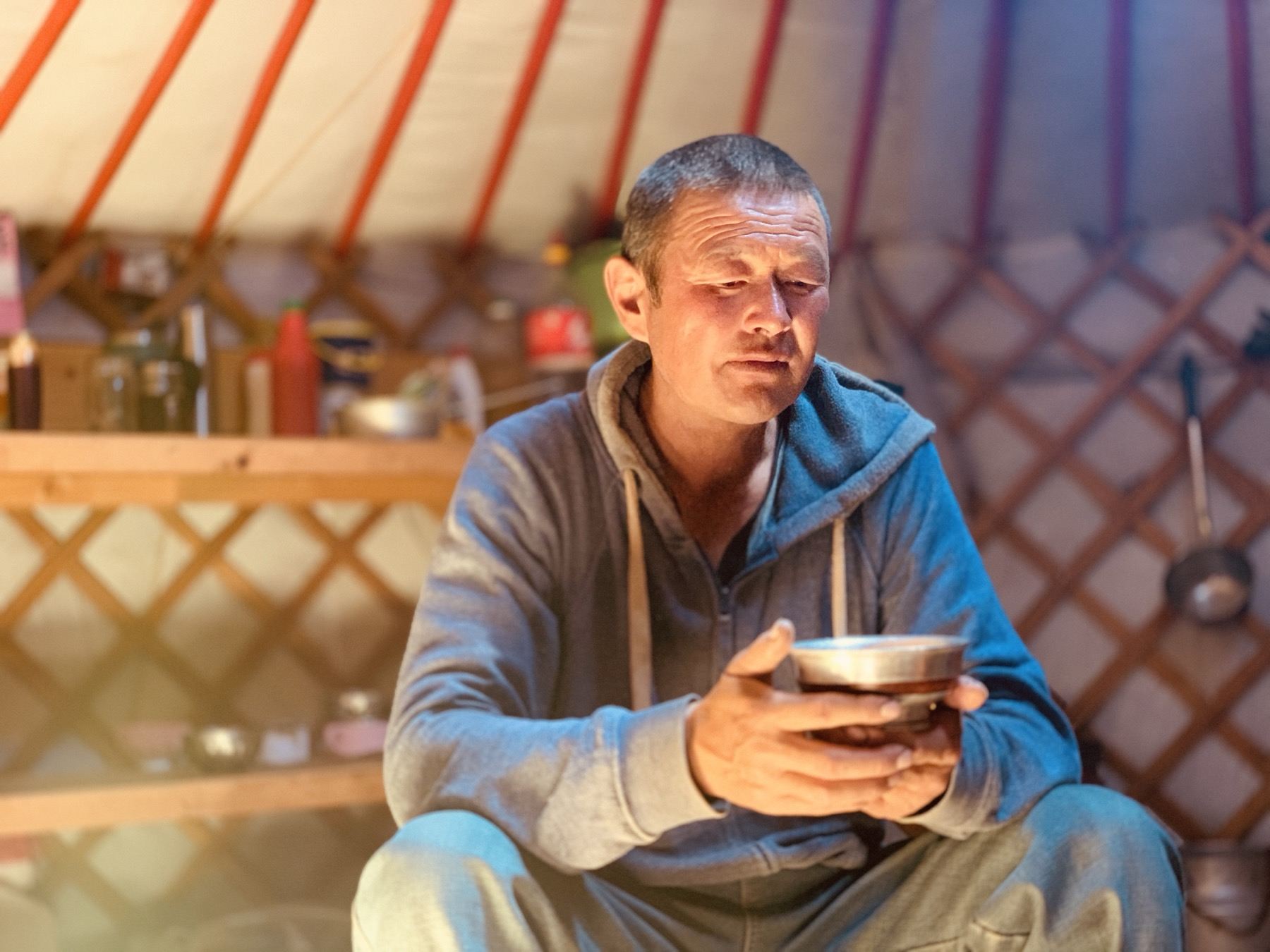
Hospitality on the Mongolian steppe is practical, generous and closely connected to the realities of distance. A visitor may arrive after several hours on an unpaved road, in a place where the nearest shop or clinic is far away. Tea, food and a place to sit are therefore not decorative gestures. They are part of a long-established social responsibility toward guests.
Enter with patience
A ger is both a home and a highly organized working space. Livestock, children, meals, repairs and seasonal work continue whether visitors are present or not. The most respectful encounters allow the household to remain itself.
The quality of the visit is often determined by how little it feels arranged.
What guests may be offered
Milk tea, dairy products, bread, meat, sweets or airag may be offered depending on the season and the household. Accepting a small amount is generally appreciated. Dietary restrictions should be communicated to the guide in advance so the host is not placed in an uncomfortable position.
Photography
Always ask before photographing people, children, personal objects or religious items. A guide can help explain the request and make sure consent is genuine rather than assumed.
Why time matters
Short, rushed visits tend to produce superficial interactions. A better itinerary creates enough time to share tea, ask questions through the guide and understand what the family is doing that day.