Reading the Gobi
The Gobi is not a single desert of sand. It is a vast region of gravel plains, mountains, canyons, fossil beds and seasonal pasture.
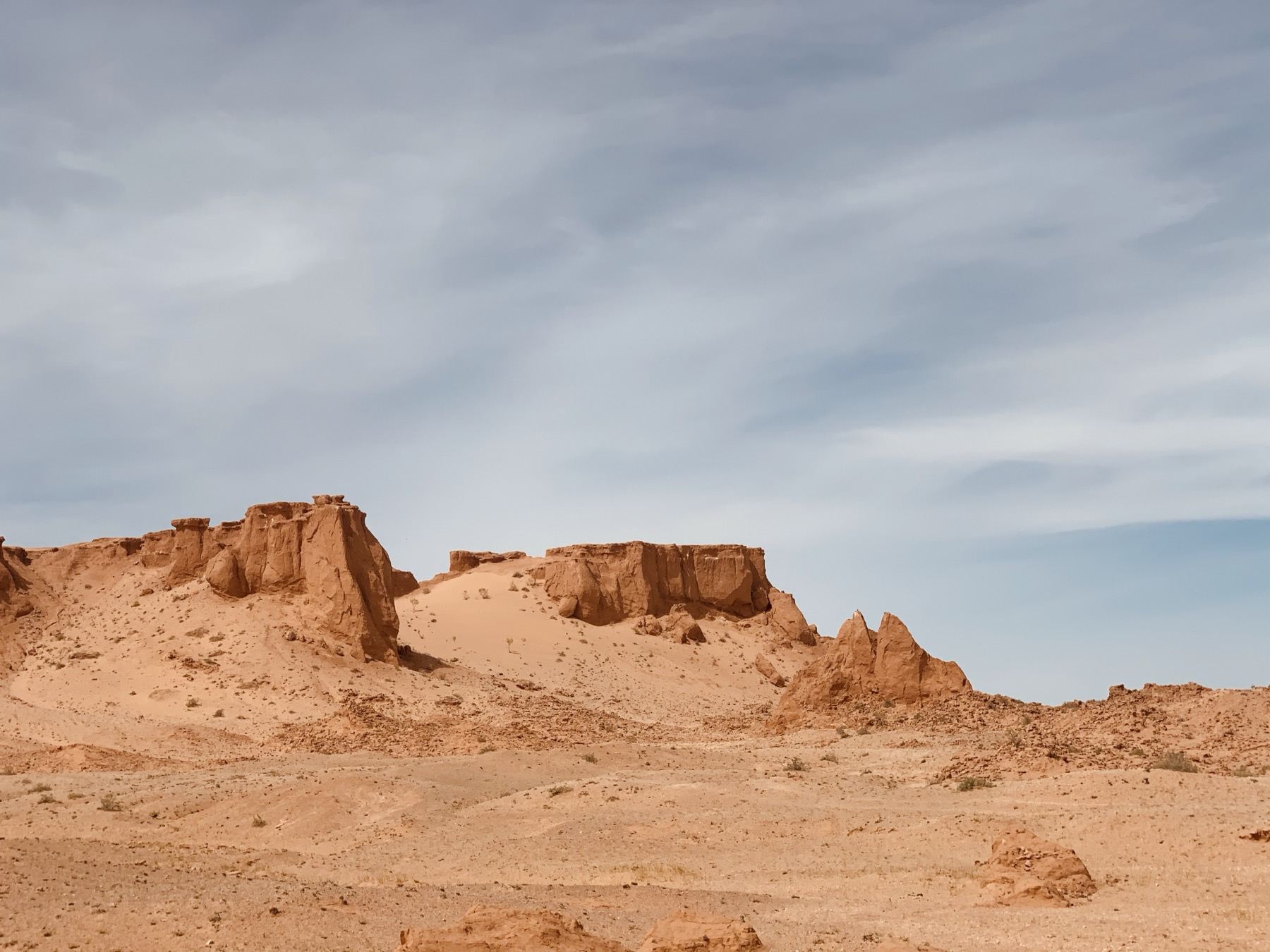
The word “Gobi” often creates an image of continuous dunes. In reality, sand covers only part of the region. Much of the landscape consists of stony plains, dry valleys, mountain systems and exposed sedimentary formations.
A landscape of distance
Travel times are influenced by track conditions, weather and the need to navigate around soft ground, washed-out sections or livestock. A route that appears short on a map may still require a full day.
Why paleontology belongs here
Erosion exposes layers that preserve evidence of ancient environments and animals. The significance of a site is not simply the presence of fossils, but the geological context in which they are found.
Life in an arid region
Herder families adapt through mobility, diversified livestock and careful use of wells and seasonal pasture. Encounters should explain this adaptation rather than presenting the Gobi as empty wilderness.
Best light, realistic planning
Photographers often prefer early morning and late afternoon, but reaching the right location at the right time requires accommodation and routing decisions made well in advance.